Hong Kong Stair Archive
Ongoing research and publication project
March 21, 2017
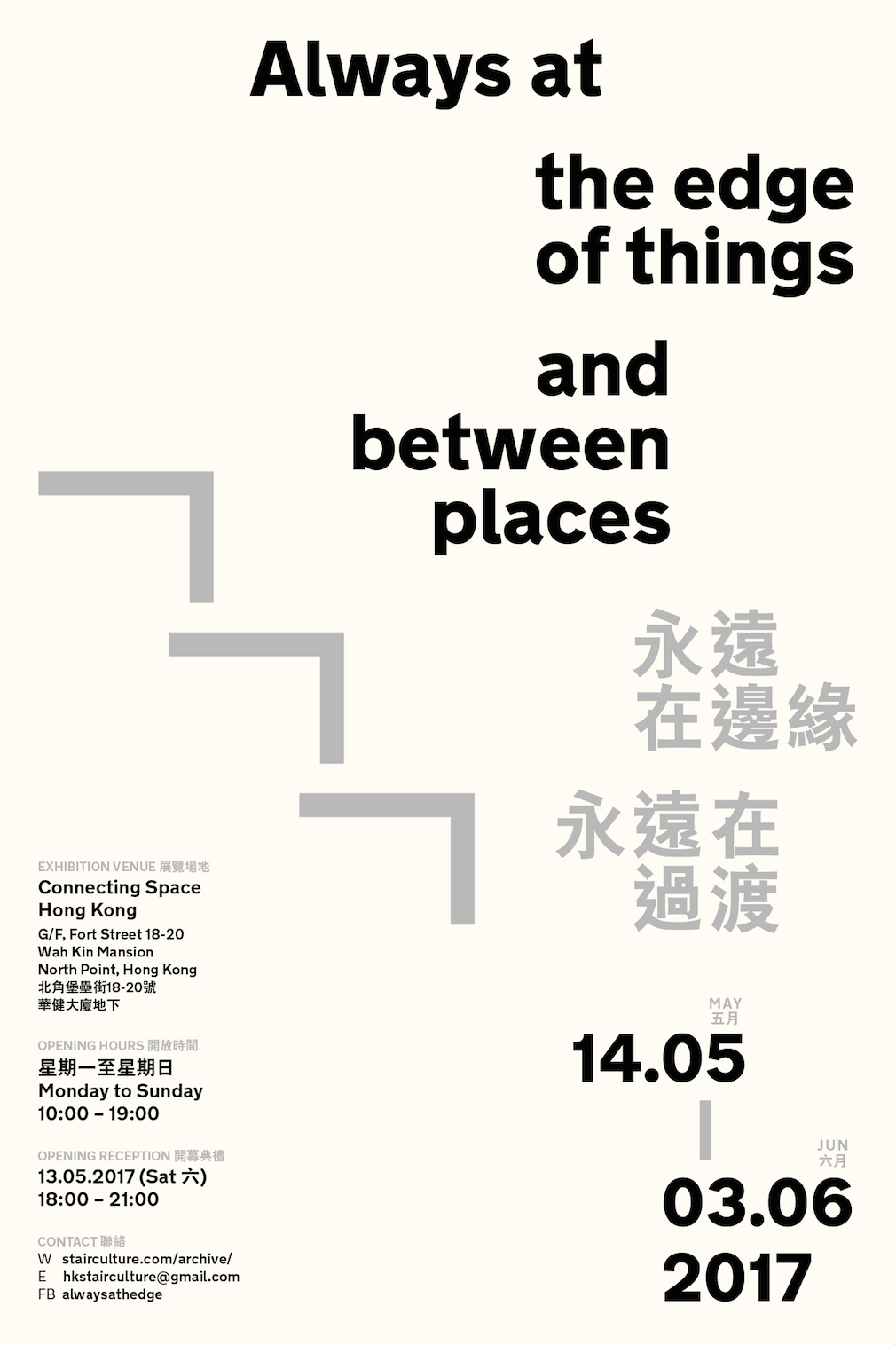
Always at the edge of things and between places 永遠在邊緣永遠在過渡
開幕典禮 Opening Reception 13/05/2017 (Sat 六) 18:00 – 21:00
展覽時期 Exhibition Period:14/5 – 03/6/2017
開放時間 Opening Hours:星期一 至 星期日 Monday to Sunday 10:00 – 19:00
場地 Venue:Connecting Space Hong Kong G/F, Fort Street 18-20, Wah Kin Mansion North Point, Hong Kong
北角堡壘街18-20號華健大廈地下
https://stairculture.com/archive/exhibition/
hkstairculture@gmail.com
https://www.facebook.com/alwaysathedge
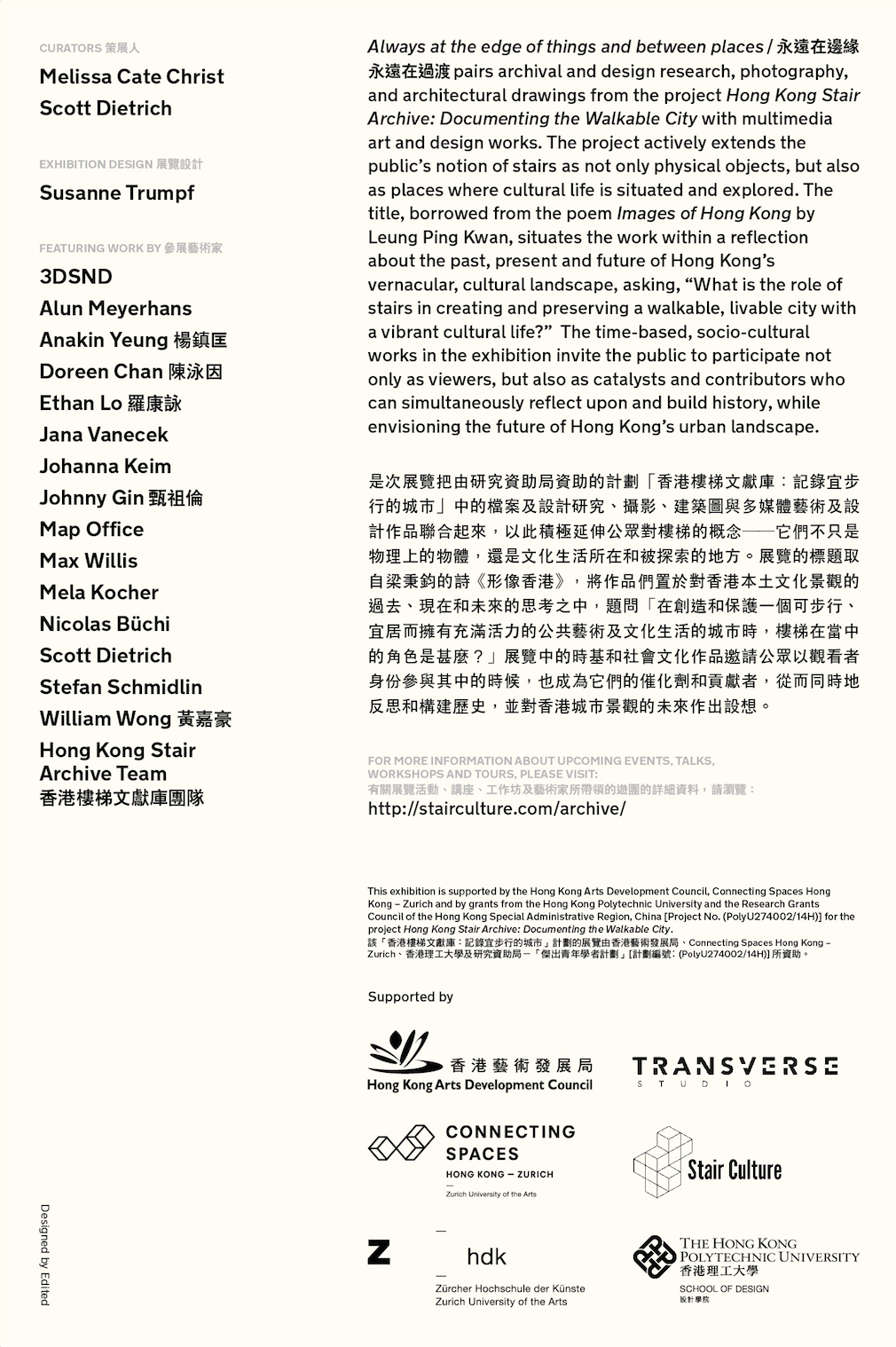
We are pleased to announce the upcoming exhibition, Always at the edge of things and between places 永遠在邊緣永遠在過渡, which pairs archival and design research, photography, and architectural drawings from the project Hong Kong Stair Archive: Documenting the Walkable City with multimedia art and design works. The project actively extends the public’s notion of stairs as not only physical objects but also as places where cultural life is situated and explored. The title, borrowed from the poem Images of Hong Kong by Leung Ping Kwan, situated the work within a reflection about the past, present and future of Hong Kong’s vernacular, cultural landscape, asking, “What is the role of stairs in creating and preserving a walkable, livable city with a vibrant cultural life?” The time-based, socio-cultural works in the exhibition invite the public to participate not only as viewers, but also as catalysts and contributors who can simultaneously reflect upon and build history, while envisioning the future of Hong Kong’s urban landscape. For more information please visit: http://stairculture.com/archive/
December 15, 2015
Hong Kong Stair Archive online (beta version)
The Hong Kong Stair Archive (beta) website is up and running, with more materials being added everyday. Keep an eye out for updates and announcements about the site, exhibition, workshops/talks and call for artists and the publication. Also, please contact us if you want to take part in our crowdsourcing efforts to collect photos, stories and other information about stairs in Hong Kong or if you have other suggestions or comments!
Project abstract:
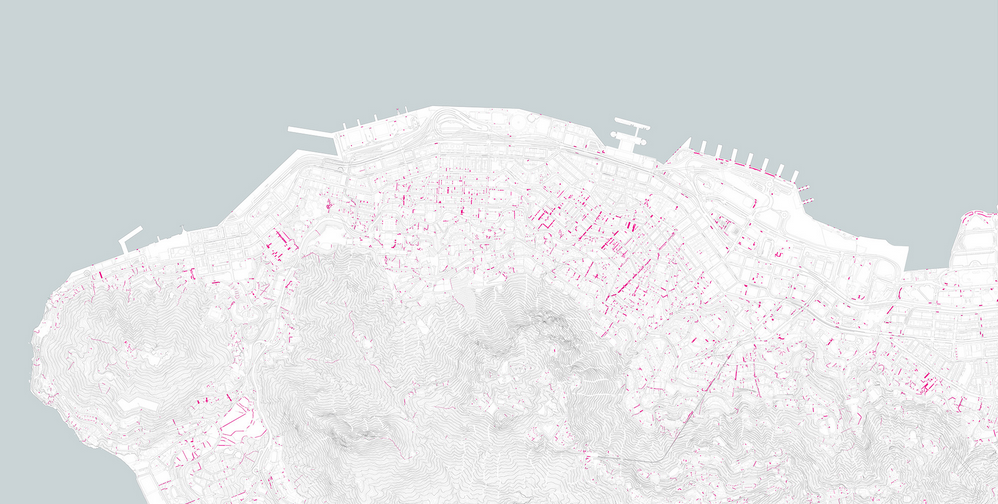
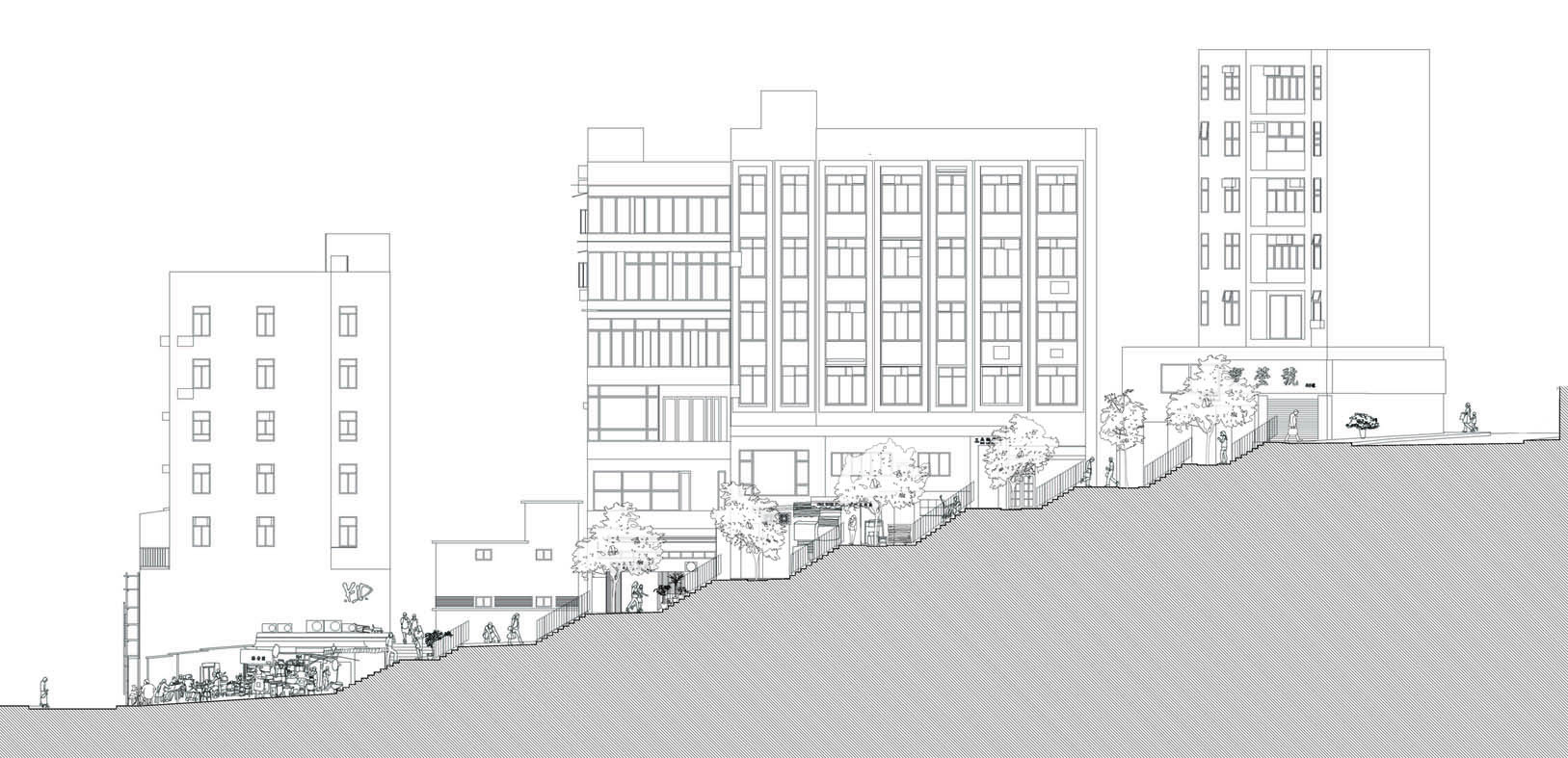
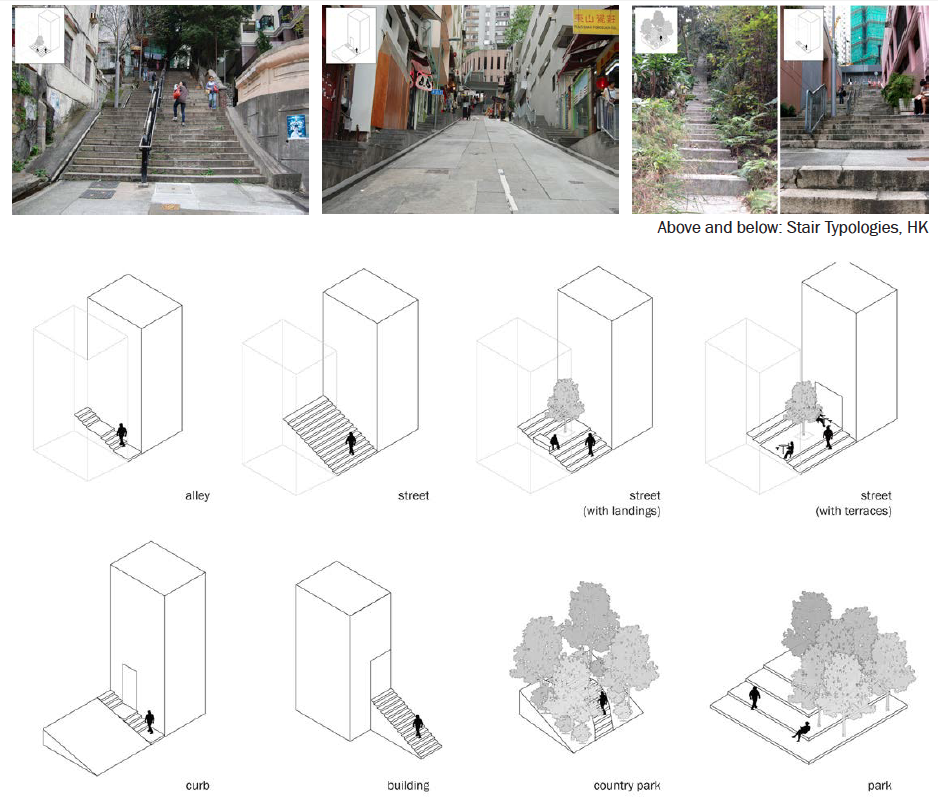
This project creates an inventory and archive of outdoor stairs located primarily in the Central and Western District, HK Island. A significant and often historic part of the urban fabric, staircases evidence a unique stair culture which is increasingly threatened by careless maintenance practices and construction projects. The aim of the project is to consolidate archival research on the history of HK stairs, documentation of their present state through the work of contemporary professional and amateur photographers, architectural drawings, and a physical and social inventory, and to theorize the research through scholarly publications and conference presentations. The primary products of the research will be a book and accompanying exhibition and symposium, academic articles and a stair inventory content management system/website.
The first phase of the project examines archival and government records in combination with basic site investigations to confirm an initial list of historically significant stairs which will structure the framework for the documentation and stair inventory content management system prototype. This system will be a repository for the data collected throughout the project. Local models for the system include the HK slopes database and the Old and Valuable Tree list, but our system will be based on open source principles with a goal to use it as a model for a more complete inventory of HK stairs.
The second phase of the project collects detailed data and measurements to facilitate architectural drawings and a physical and social inventory. This part of the project will also involve collaborations with artists and photography students, a crowdsourced effort to collect stair photos and stories, and Google Streetview to capture stair routes, 90% of which are not currently available on Google Maps.
The third phase of the project organizes and synthesizes the data into five types of output: a website/content management system, a coffee-table type book, a public exhibition, an academic symposium, and a journal paper.
Ultimately, this work seeks to raise public awareness about the value of stairs to HK’s history, its everyday life, and its continuance as a liveable city. As key components of a rich, walkable pedestrian environment which occupies steep topography, the physical and social life of stairways needs to be documented, recorded and celebrated, both to increase the likelihood of their protection, and to contribute to a broader historical archive of the continuing development of the city. The HK Stair Archive captures a typology of infrastructure which has never been systematically or thoroughly researched in Hong Kong, despite their ubiquitous presence and absolute necessity in the efficient navigation of the city.
Recent work and events:
October 11, 2016 (forthcoming)
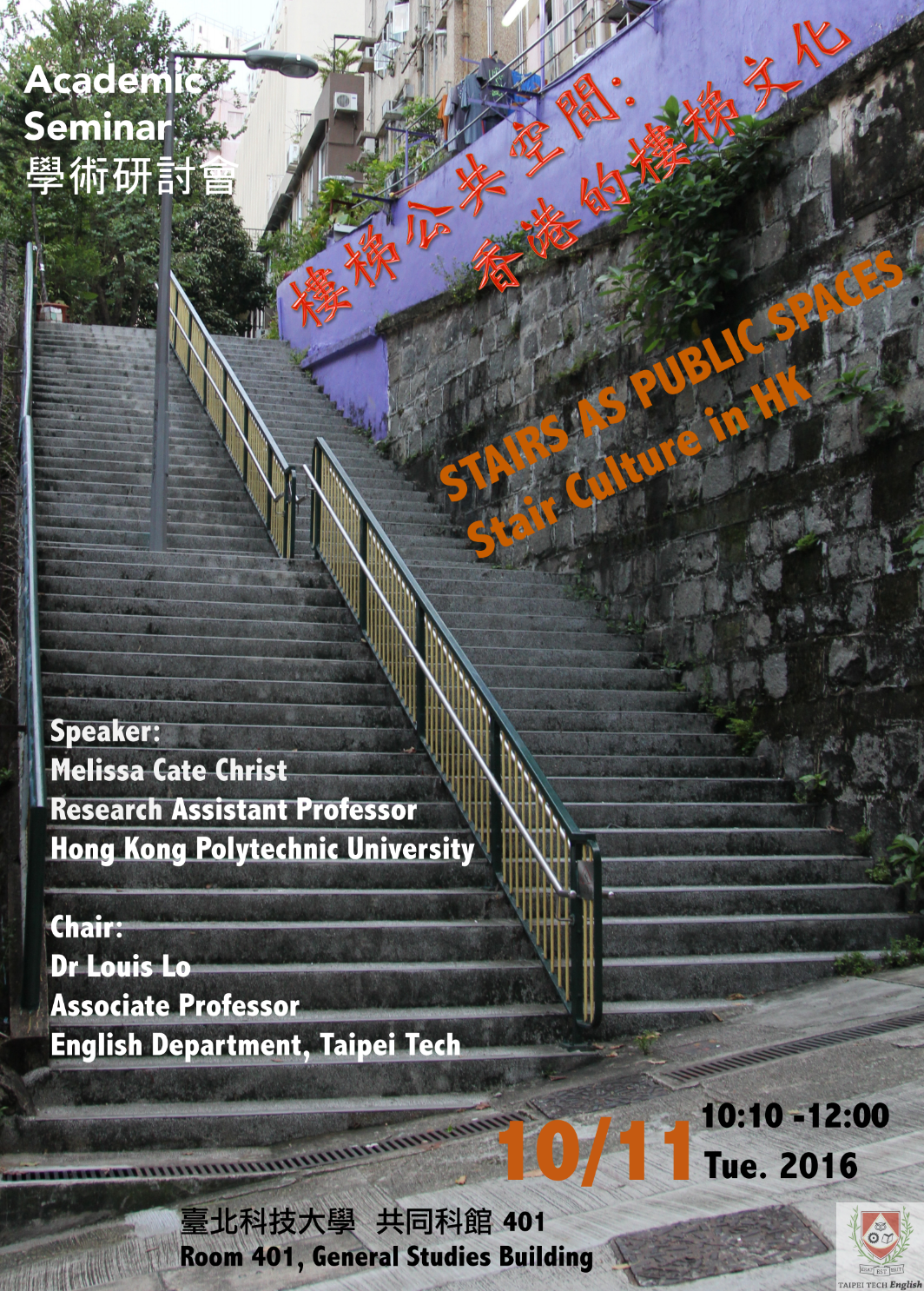
Stairs as public spaces: Stair culture in Hong Kong
National Taipei Technical University, Taipei, Taiwan
Melissa has been invited to present the Hong Kong Stair Archive project at Taipei Tech in October. Looking forward to a productive and engaging discussion with Louis Lo and colleagues and students from the English and Design Departments!
October 5, 2016
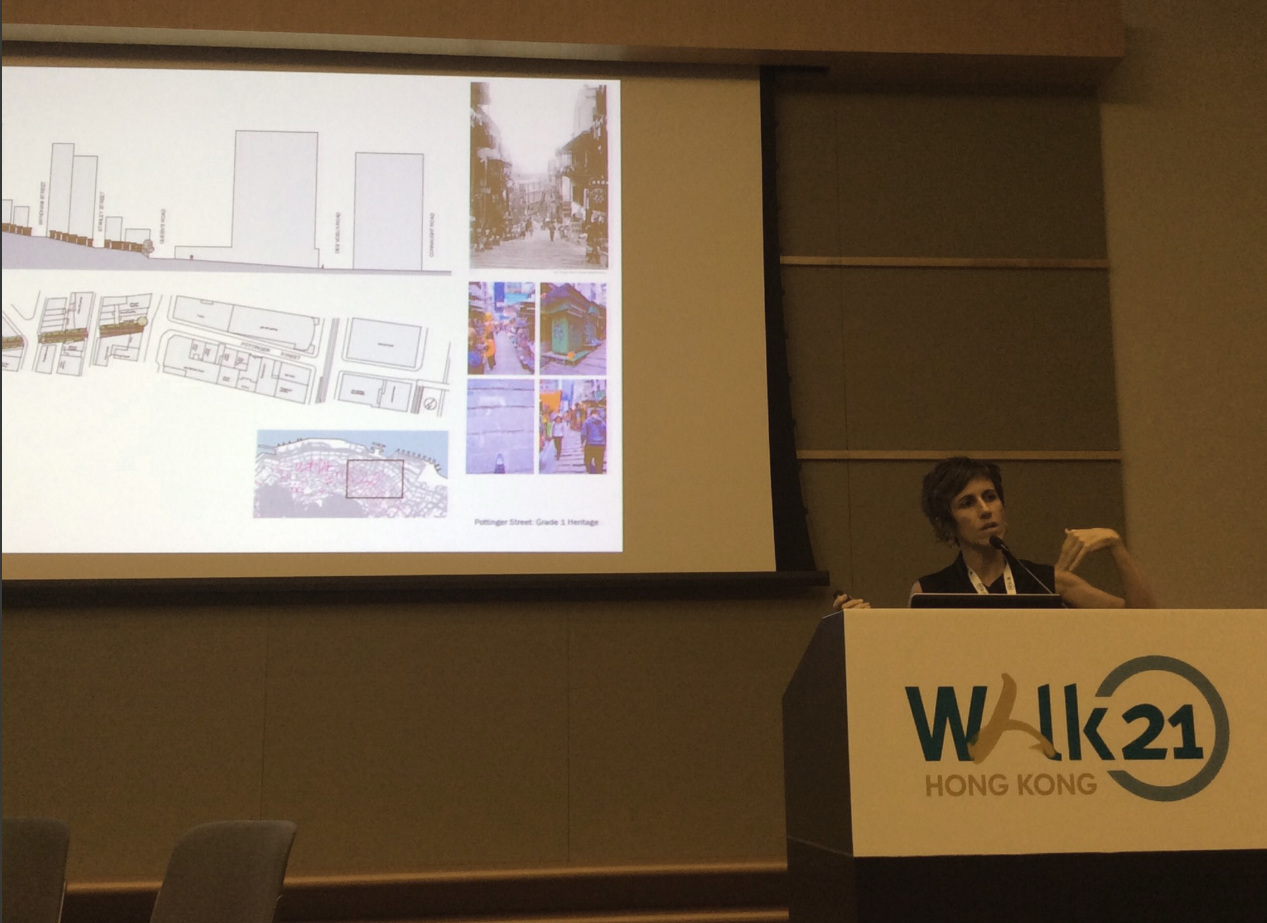
Walking, heritage and public space: Stair Culture in Hong Kong
Walk21 Hong Kong
Hong Kong Convention and Exhibition Centre
Wan Chai, Hong Kong
Melissa presented the history, background and current status of the Hong Kong Stair Archive project as part of Walk21 Hong Kong, the annual international conference on walking and liveable communities.
May 20, 2016
Article on Hong Kong stairs published in HK Magazine
Jessica Wei’s article includes interviews with Melissa about HK’s stair culture as well as with Google about their recent inclusion of several HK stairs as ‘see inside’ imagery on Google Street View.
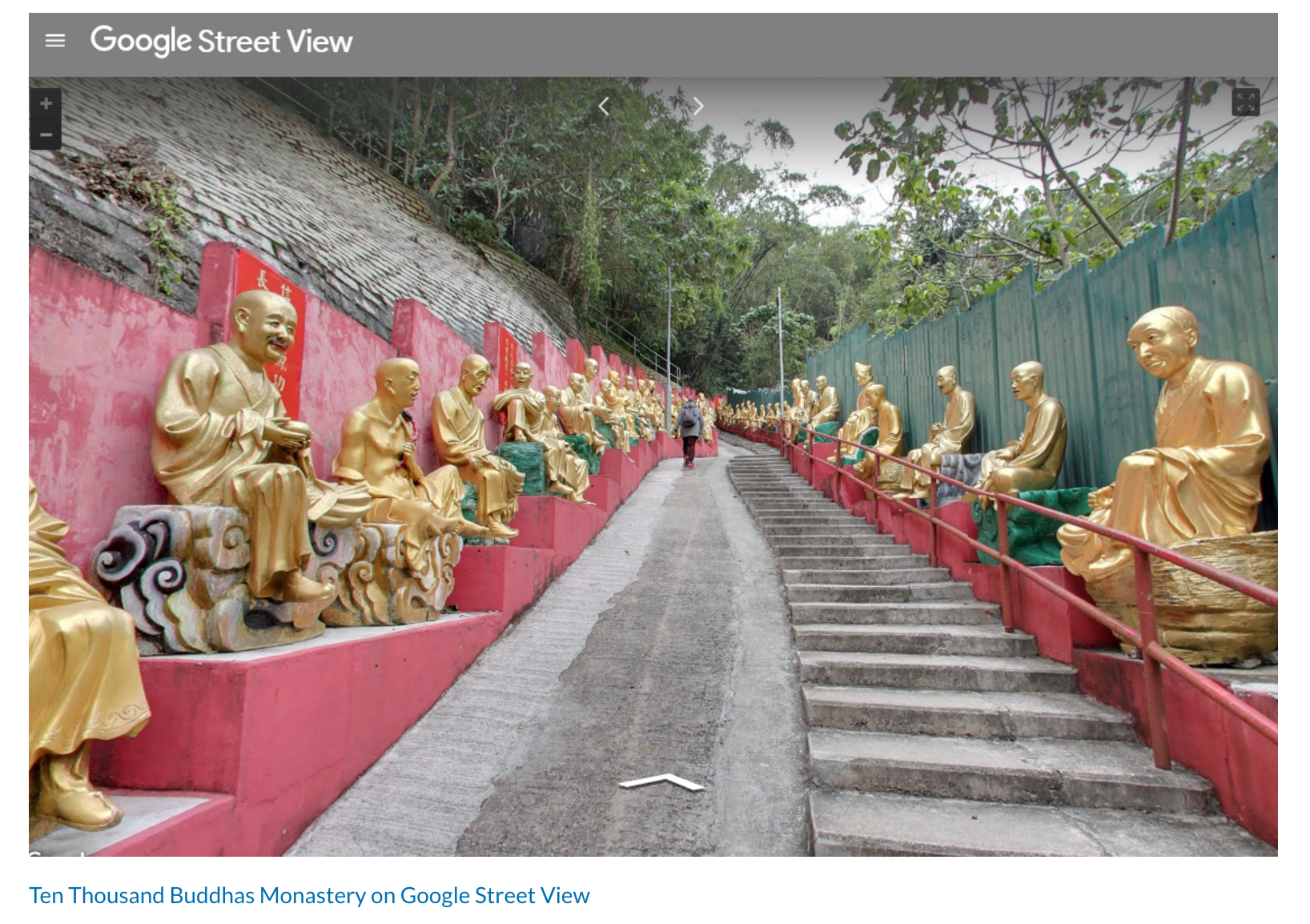 Image credit: HK Magazine
May 5, 2016
Article by Christopher DeWolf on Stair Culture project published in Zolima City Magazine
DeWolf‘s article “Stair Culture: Digging Into the Past and Present of Hong Kong’s Ladder Streets” gives a short overview of the Hong Kong Stair Archive project and the importance of stairs to Hong Kong’s history and culture. Thanks Chris for the profile!
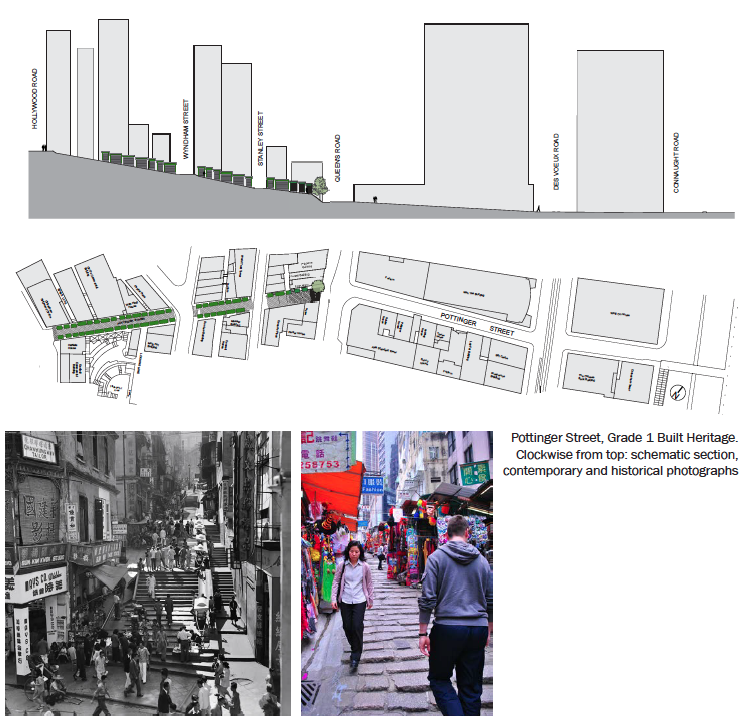
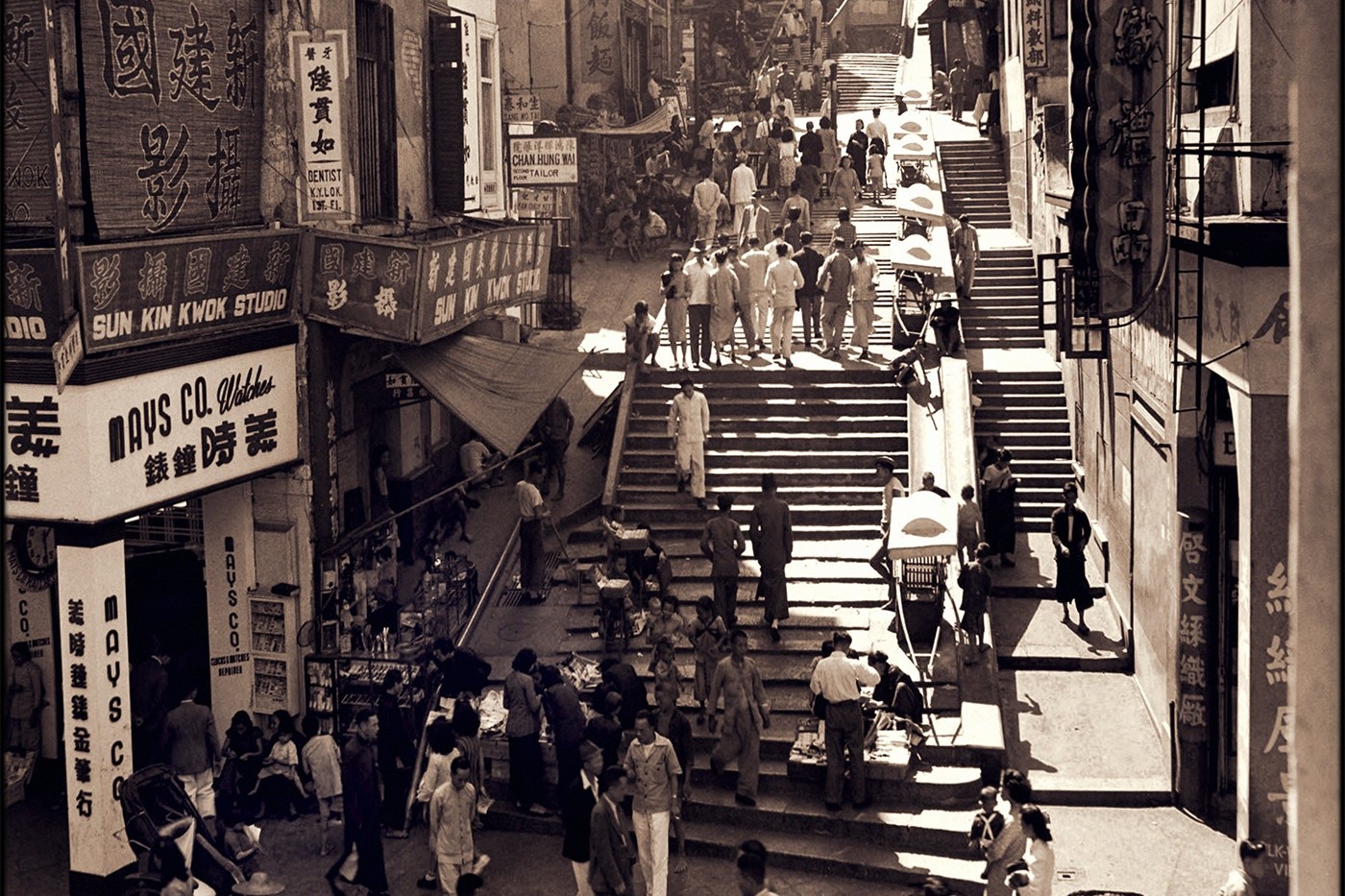 Pottinger Street, 1946 (Photo credit: Hedda Morrison)
March 7-12, 2016
Urban Stairs as Public Spaces in High-Density Island Cities:
The Case of the Central and Western District of Hong Kong Island
Island Cities and Urban Archipelagos 2016 Conference
University of Hong Kong, Hong Kong
{image 84}Melissa presented her research-in-progress on the RGC funded Hong Kong Stair Archive project at the Island Cities and Urban Archipelagos conference on March 09, 2016. From the conference abstract:
This conference brings together researchers from across the globe to explore urban life on islands and archipelagos. Islands are often associated with peripherality, yet they have long been important sites for the growth of cities. Physical separation from the mainland and spatial limitations can encourage the transport of products and ideas, improved defence infrastructure, construction of social capital, consolidation of political power, formation of vibrant cultures, and concentration of population. Some island cities were located on inland river islands and have since expanded far beyond their original borders while others are still strongly associated with their island cores. Fostering dialogue between the fields of island studies and urban studies, this interdisciplinary conference will feature presentations that explore and critique the varied connections between the urban and the insular from a diversity of perspectives on culture, planning, politics, architecture, economy, and environment in island cities worldwide. We welcome papers and panels focusing on individual case studies as well comparative analyses and conceptual frames.
More information about the conference, the Urban Island Studies journal and the Island Dynamic research group can be found here.