Food Networks
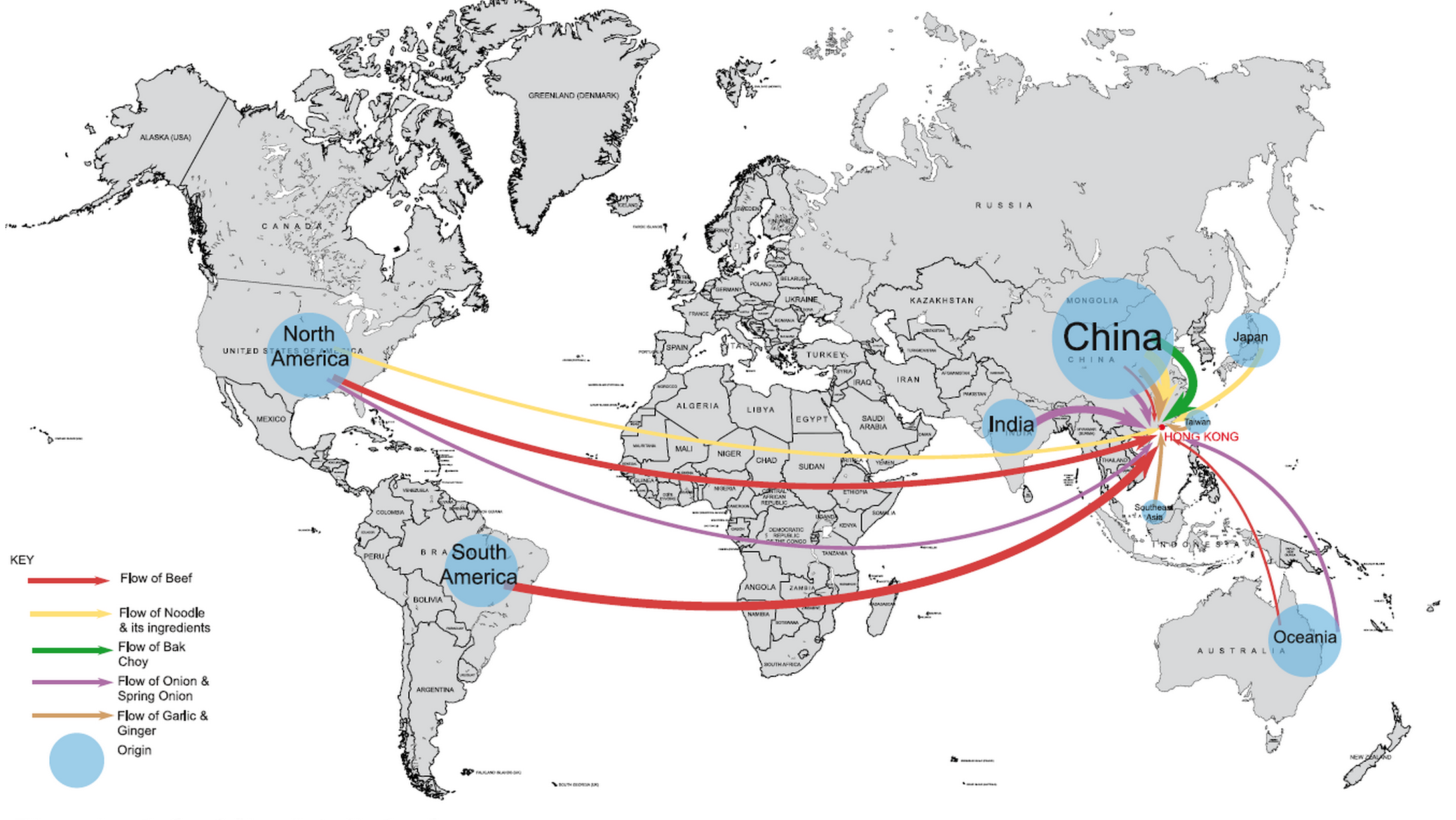
Food Networks is an ongoing research and documentation project which investigates the political economy and ecologies of historical and contemporary global and local food networks, with a focus on Hong Kong. The research and teaching frameworks have been developed with the support of a HKU Seed Fund Grant, a Teaching and Development Grant and in the context of the HKU Common Core Curriculum Course “You Food and City: Local and Global Food Networks”. The collected work of the course can be found here. Recent work supporting the development of the project is included below.
August 23, 2016
Recover and Reduce Food Waste: Crowdsourcing Surplus Food Recovery in Hong Kong
RISUD Annual International Symposium 2016 – Smart Cities
PolyU, Hong Kong
Melissa presented an overview of her, Daisy Tam and Tomas Holderness’ collaborative project at PolyU’s multidisciplinary RISUD conference. From the paper abstract:
This paper presents an in-progress project which aims to reduce the amount of food waste generated in Hong Kong. Through the consolidation and analysis of data concerning existing food rescue practices and the development of an open source platform that facilitates crowdsourced surplus food recovery, this research and technological demonstration project aims to enhance the city’s capacity to recycle surplus food.
July 31, 2016
Daisy Tam publishes article on HK food security in Chinese online magazine The Initium
Daisy’s editorial 「看不見」的城市糧食安全危機 (roughly translates to [Invisible] Food Security Crisis) touches on issues of food security, poverty and food waste in Hong Kong. She also gave a related talk at the “Future of F&B in Hong Kong” networking lecture series at Metta to a packed house of HK’s F&B entrepreneurs.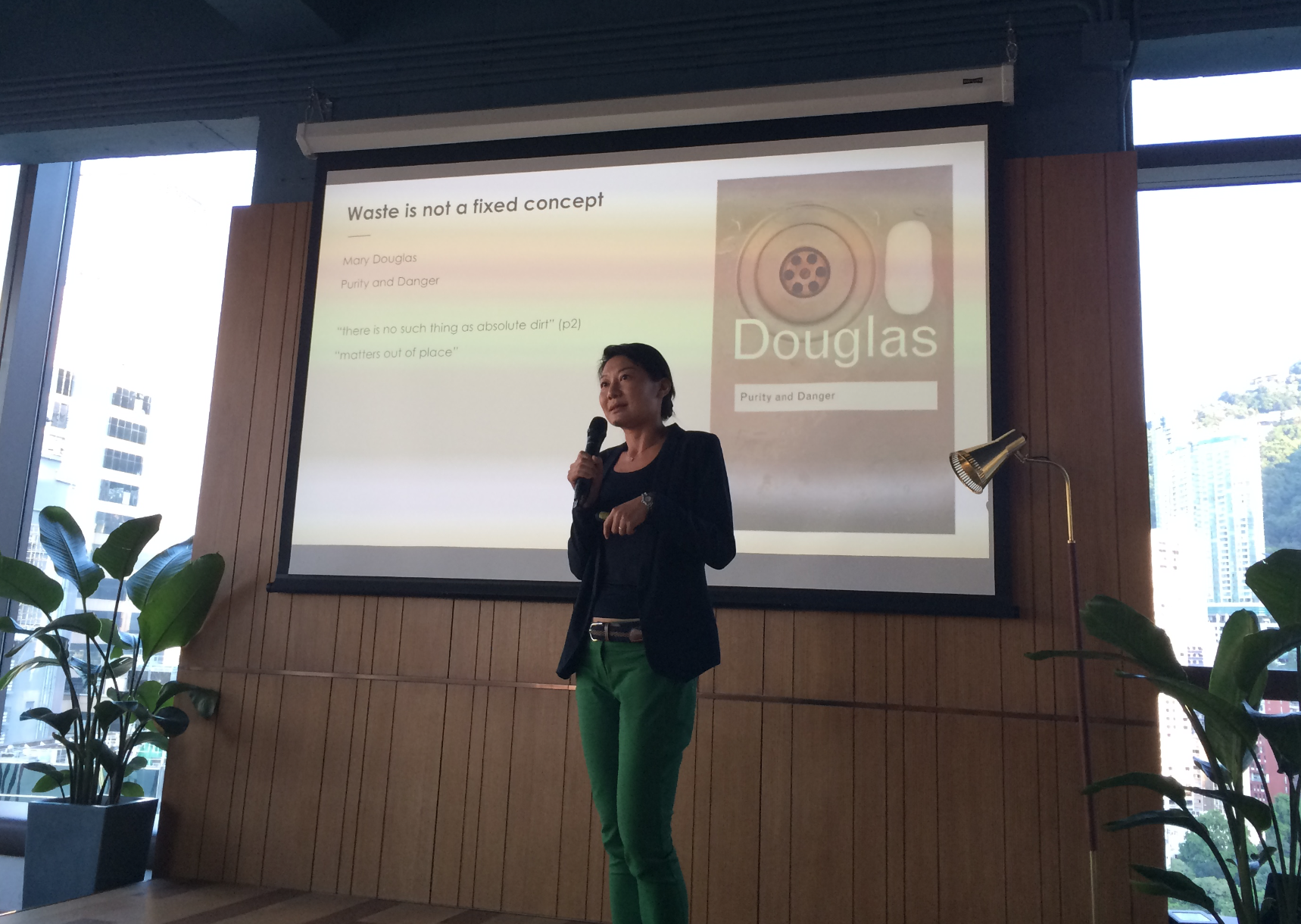
Daisy Tam, Food Security in HK, Metta, HK. July 29, 2016
June 27, 2016
Planter workshop with Rooftop Republic
French International School, Hong Kong
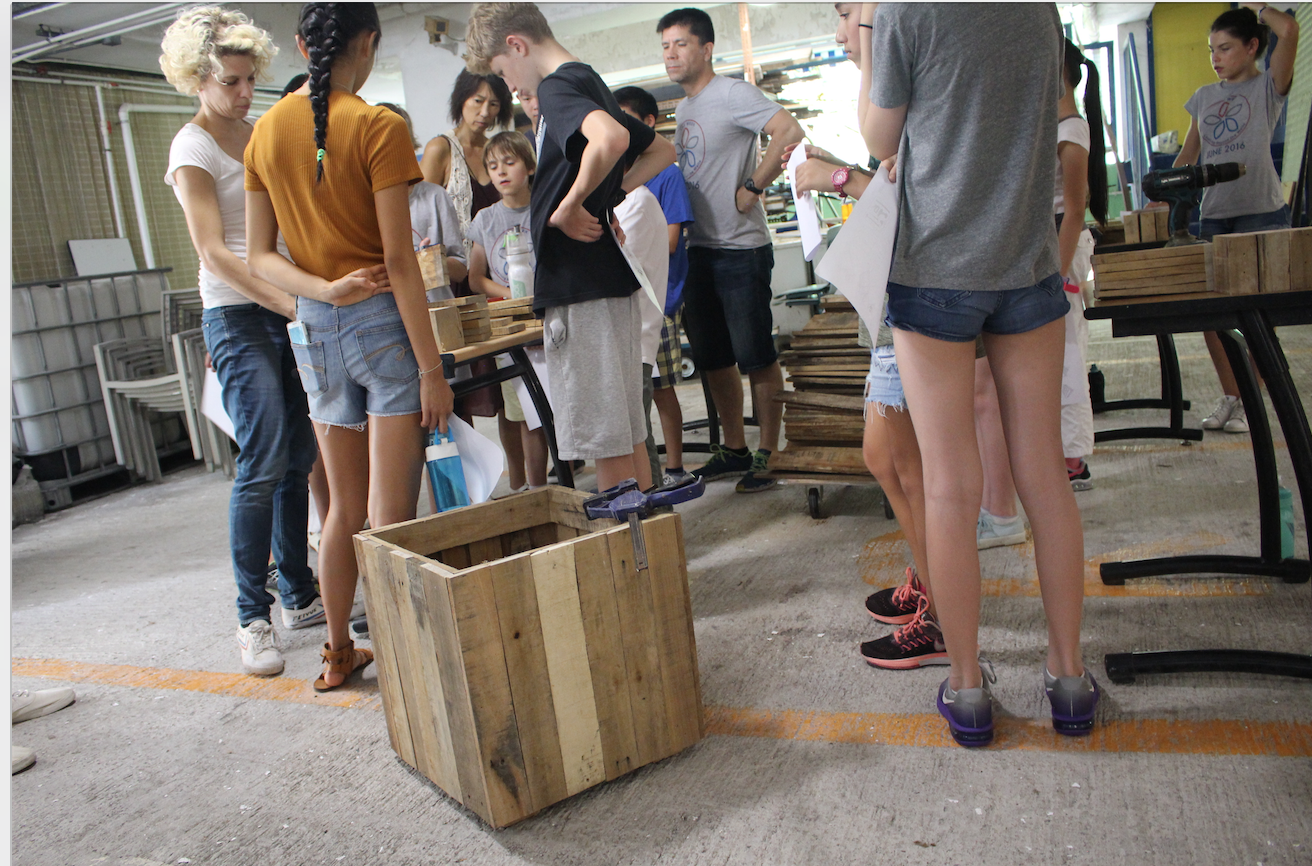
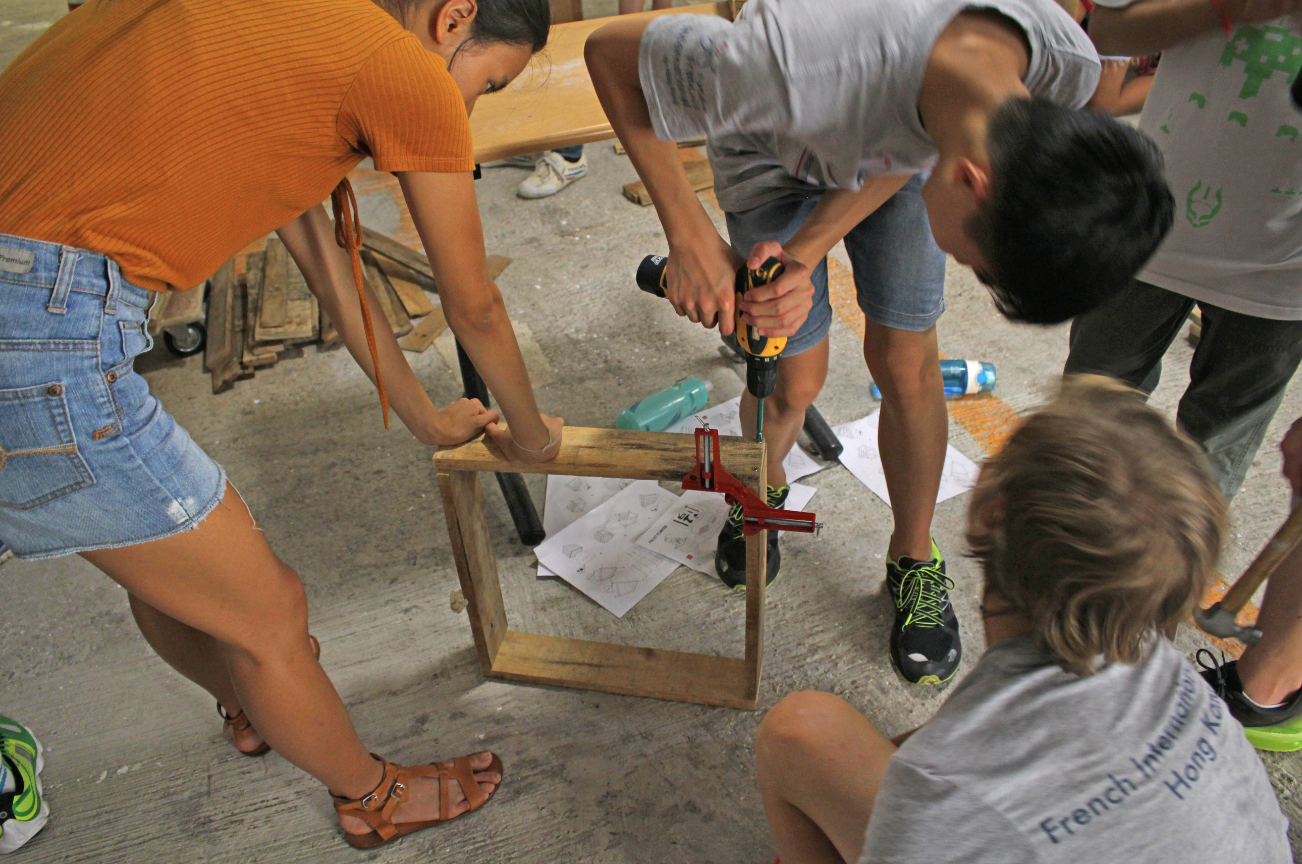
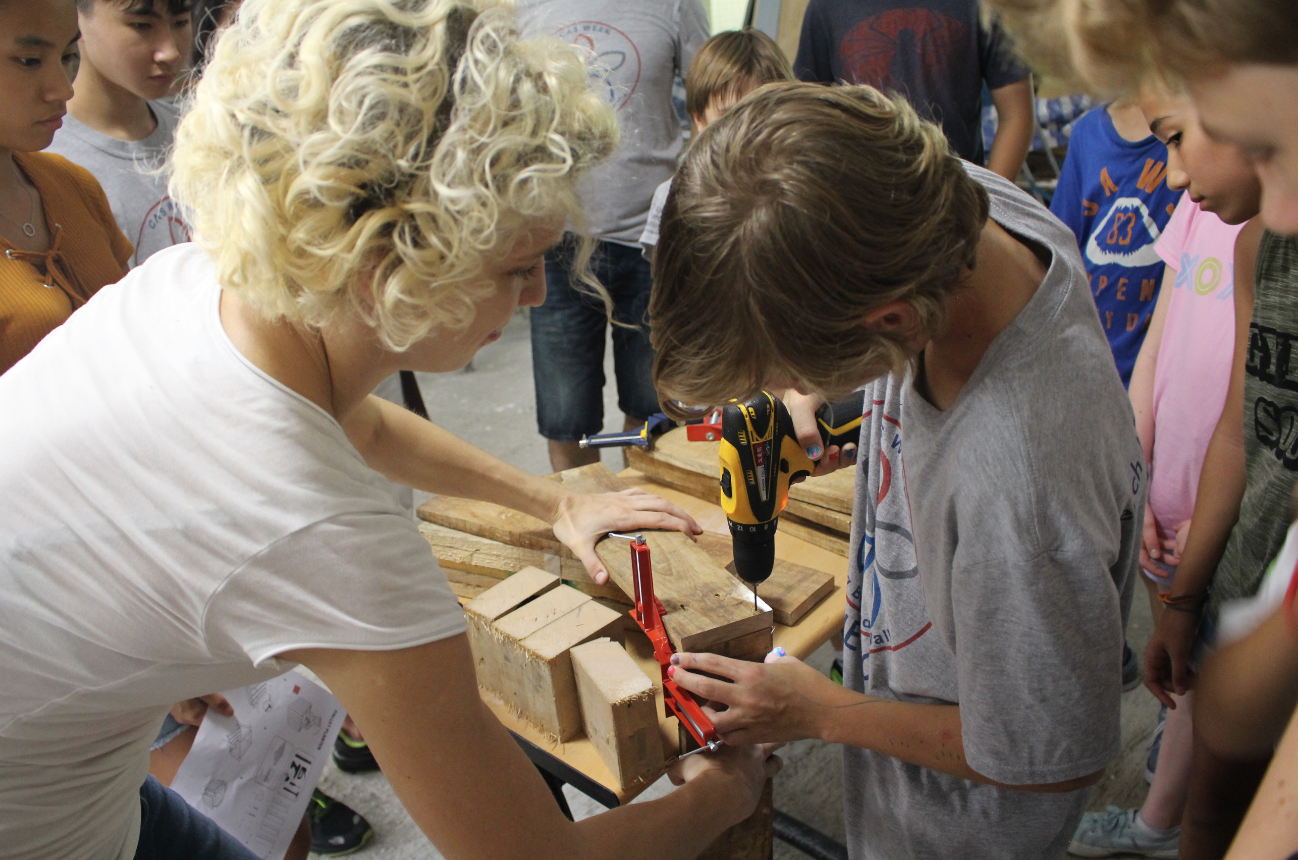
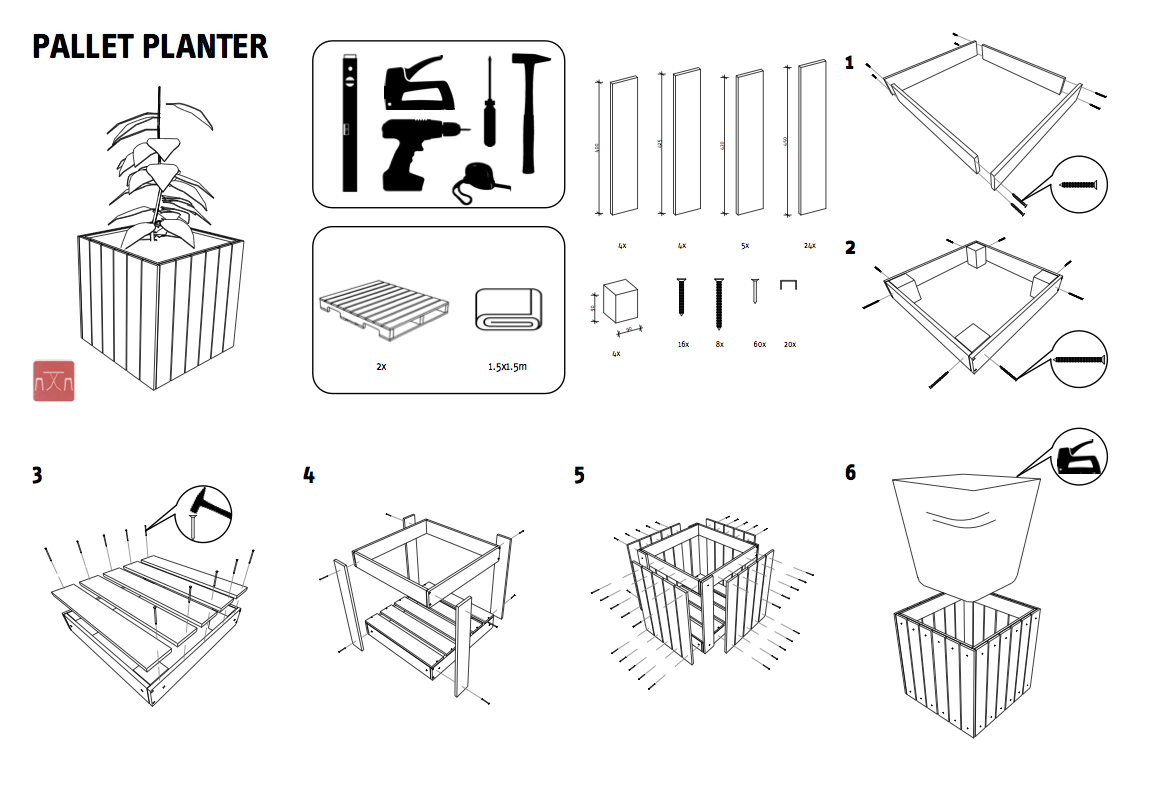
At the invitation of Rooftop Republic as part of their educational programming, Melissa and Susanne Trumpf of in dialogue designed and organized a planter making workshop for secondary school students. Led by Susi, with preparatory work conducted at Maker Bay, the 3 hour workshop engaged students in making 50cm x 50cm x 50cm planters from reclaimed pallet wood, gaining valuable hands-on training in the use of power and hand tools, as well as in collaborative group work. The planters will be used at the school as part of their community garden. Drawing Credit: Susanne Trumpf. Photo credits: Rooftop Republic
December 6-10, 2015
Listening to noise – people as sensors, enabling ethical food networks
Agri-food XXII Conference
Queenstown, New Zealand
Melissa and Daisy Tam (Hong Kong Baptist University) will be presenting their paper co-written with Tomas Holderness (University of Wollingong), Listening to noise – people as sensors, enabling ethical food networks at the Agri-food XXII conference.
Paper abstract:
This paper looks at the individual in relation to urban food networks and explores the potential of the crowd as a means to enable a more ethical food system. The crowd is noise – dispersed individuals who are loose and unconnected. How can the crowd become a form of human-power sensor network that allows us to tune into the message? How can noise be used to challenge the existing system and allow for different sets of interdependencies to emerge? How can this model of commonality exist without collectivity? The import-distribute consume-dispose food system such as the one in Hong Kong is controlled by a handful of big players where individuals are relegated to their role as consumers. This paper explores alternatives that interrupt the linear model and allow disparate individuals to form collaborative practices for a more ethical food system. Ethics here is understood as a mode of operation, which articulates a set of relationships; it is a manner of being implicated in the provocation of actions; it is also generative, creating a series of radiating effect which impacts upon the community.
October 6, 2015
Food Security and the Commons: the case of Singapore
GDAR1026 Food Culture and Society course
Hong Kong Baptist University, Hong Kong
Melissa was invited by Daisy Tam to present her paper on urban agriculture and food security in Singapore to undergraduate students from Baptist University. The course also includes hands-on gardening and site visits to Hong Kong organic farms.
February 21, 2014
Season Shift: Radical Phenology and the Global Economy of Food
Lunchtime Public Lecture: HKU Division of Landscape Architecture
DATE: Friday, 21 February 2014
TIME: 1–2pm
VENUE: KB622, 6/F Knowles Building, Pokfulam Road, the University of Hong Kong
SPEAKER: Assistant Professor Melissa Cate Christ
ABSTRACT:
This talk presents initial research that seeks to understand our pervasive seasonal disassociation with respect to food. In particular, it highlights nodes of historical, technological and vernacular agencies and practices that have enabled the global food economy.
This lecture is part of ‘The Lay of the Land’, a lecture series hosted by the HKU Division of Landscape Architecture focused on research in progress.
November 27, 2013
EXCESS launch
Wednesday, 27 November, 2013
6:30pm reception, 7-9pm discussion
Broadway Cinematheque (next to Kubrick Cafe and Bookstore), Foyer area on 1/F
Prosperous Garden, 3 Public Square Street, Yau Ma Tei, Kowloon
kubrick.com.hk
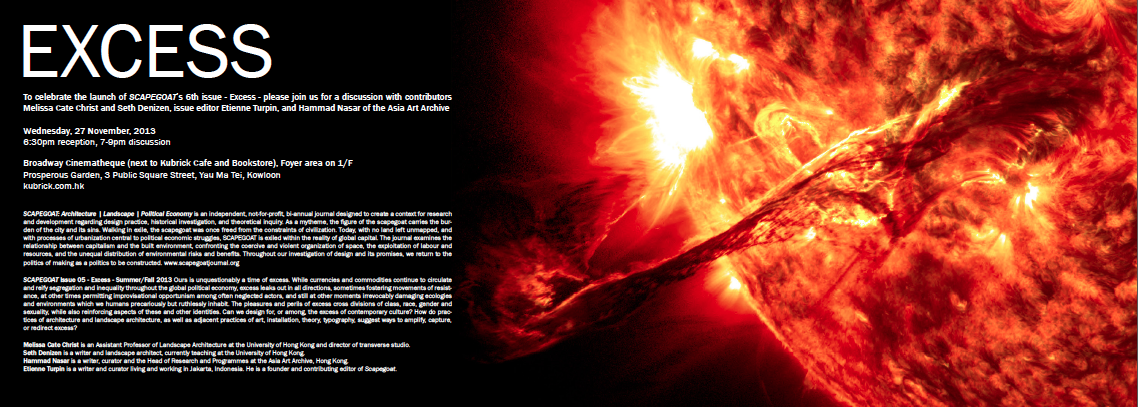
To celebrate the launch of SCAPEGOAT’s 6th issue – Excess – please join us for a discussion with contributors Melissa Cate Christ and Seth Denizen, issue editor Etienne Turpin, and Hammad Nasar of the Asia Art Archive
EXCESS: Consuming Hong Kong / Scapegoat Launch
Lauded as a luxury capital, with the world’s highest per capita consumption rate of luxury goods thanks to Mainland Chinese tourists, Hong Kong is exemplary of the paradoxical relationship of excess and restriction. Haunted by myths of perpetual land scarcity, the valorization of imported goods, and a leisure culture of obsessive consumption, in Hong Kong land redevelopment policy and practice have prioritized revenue generation, shopping mall tourism and outdated models of public housing construction at the expense of both cultural and environmental heritage, and the potential for a more equitable, food-secure society.
In a discussion moderated by Hammad Nasar of the Asia Art Archive, Scapegoat editor Etienne Turpin will present the concept “excess” — the theme of Issue 05 — as a lens which we can use to observe and assess relations of confinement and consumption, and as a provocation to intervene in these processes through activism, design, and other public platforms. Scapegoat contributors Seth Denizen and Melissa Cate Christ will then discuss, respectively, the shopping mall as a model for the therapeutic transformation of the subject, and the extreme environmental and social effects of our out-of-season desire for imported vegetables on the landscape of Almeria, Spain. These presentations will be followed by a conversation with the audience about the reciprocal relations between architecture and its adjacencies, the rise of cultural tourism, and the role of independent counter-practices in the context of Hong Kong. With this presentation and discussion, we hope the launch of Scapegoat 05 will provoke further conversations about expenditure, consumption culture, and cultural politics.
From the editorial board:
SCAPEGOAT: Architecture | Landscape | Political Economy is an independent, not-for-profit, bi-annual journal designed to create a context for research and development regarding design practice, historical investigation, and theoretical inquiry. As a mytheme, the figure of the scapegoat carries the burden of the city and its sins. Walking in exile, the scapegoat was once freed from the constraints of civilization. Today, with no land left unmapped, and with processes of urbanization central to political economic struggles, SCAPEGOAT is exiled within the reality of global capital. The journal examines the relationship between capitalism and the built environment, confronting the coercive and violent organization of space, the exploitation of labour and resources, and the unequal distribution of environmental risks and benefits. Throughout our investigation of design and its promises, we return to the politics of making as a politics to be constructed. www.scapegoatjournal.org
From the issue introduction:
SCAPEGOAT Issue 05 – Excess – Summer/Fall 2013 Ours is unquestionably a time of excess. While currencies and commodities continue to circulate and reify segregation and inequality throughout the global political economy, excess leaks out in all directions, sometimes fostering movements of resistance,at other times permitting improvisational opportunism among often neglected actors, and still at other moments irrevocably damaging ecologies and environments which we humans precariously but ruthlessly inhabit. The pleasures and perils of excess cross divisions of class, race, gender and sexuality, while also reinforcing aspects of these and other identities. Can we design for, or among, the excess of contemporary culture? How do practices of architecture and landscape architecture, as well as adjacent practices of art, installation, theory, typography, suggest ways to amplify, capture, or redirect excess?
Melissa Cate Christ is an Asst. Professor of Landscape Architecture at the University of Hong Kong and director of transverse studio.
Seth Denizen is a writer and landscape architect, currently teaching at the University of Hong Kong.
Hammad Nasar is a writer, curator and the Head of Research and Programmes at the Asia Art Archive, Hong Kong.
Etienne Turpin is a writer and curator living and working in Jakarta, Indonesia. He is a founder and contributing editor of Scapegoat.
November 23, 2013
Without Exteriority/Excessive Urbanism
EXCESS launch: Shanghai
Saturday November 23
3-5pm discussion, 5-7 reception
Shanghai Study Centre – more info
WITHOUT EXTERIORITY: ARCHITECTURE AFTER THE URBAN-RURAL DICHOTOMY
By 1973, Raymond Williams’ The Country and the City had already located fundamental contradictions in the urban, academic image of rural life. For Williams, the rural was a myth functioning as a memory of the origins of the city; yet, despite his prescient analysis, the myth of a natural, conflict-free, rural space outside the city remains a compelling image even in our contemporary discourse. Following the continuing discussion of the rural-urban relation in China, initiated this year through the programming of the HKU Shanghai Study Center, this event introduces several new perspectives on architecture after the urban-rural divide.
In a discussion moderated by Daan Roggeveen and Xiaoyu Weng, Scapegoat editor Etienne Turpin will present the project of “Excess” as a means to better examine the past and present of urban-rural assemblages. Journal contributors Seth Denizen and Melissa Cate Christ will discuss, respectively, the therapeutic role of the pastoral in the psychosocial history of American urbanism, and the explosive growth of the garden as factory in Spain’s miracle economy. These presentations will be followed by a further discussion of China’s rural growth and its implications for designers and planners. If, as Peter Sloterdijk has suggested, the planet of terrestrial globalization has itself become a world interior of capital, we must examine how this global transition has entangled America, Europe, and Asia in a hyper-productive paradox of perpetual growth and the attendant crises of resource depletion, biodiversity loss, and megacity pollution. With this presentation and discussion, we hope our launch of Scapegoat Issue 05 will provoke conversations about excess, expenditure, and this architecture without exteriority.
Participants
Study Center Moderator _ Daan Roggeveen, director
Guest Moderator _ Xiaoyu Weng, writer and curator
Participants _ Seth Denizen, contributor _ Melissa Cate Christ, contributor _ Etienne Turpin, editor
See a video of the discussion here.
September 24, 2013
This Garden of the Sun: A Report on Almería’s Miracle Economy
Melissa Cate Christ
{image 25}
As part of Melissa’s ongoing research on the political economies and ecologies of global food production sites, networks and systems, her article “This Garden of the Sun: A Report on Almería’s Miracle Economy” has been published in Issue 05: SCAPEGOAT: Architecture | Landscape | Political Economy. You can download a pdf of the article here.
August 22-25, 2013
Food Security and the Commons
Beyond Borders: Building a Regional Commons in Southeast Asia: 3rd International Conference on International Relations and Development (ICIRD 2013)
Chulalongkorn University, Bankok, Thailand
As part of the panel Agriculture, Food Security and the Commons in ASEAN, chaired by Dr. George Michael Hayes, Melissa will be presenting her recent research on Singaporean local food production in relation to regional food security policy in the paper “Food Security and the Commons in ASEAN: the role of Singapore” on August 22, 2013. For more information on the panel see here and on the conference see here.
Melissa’s abstract:
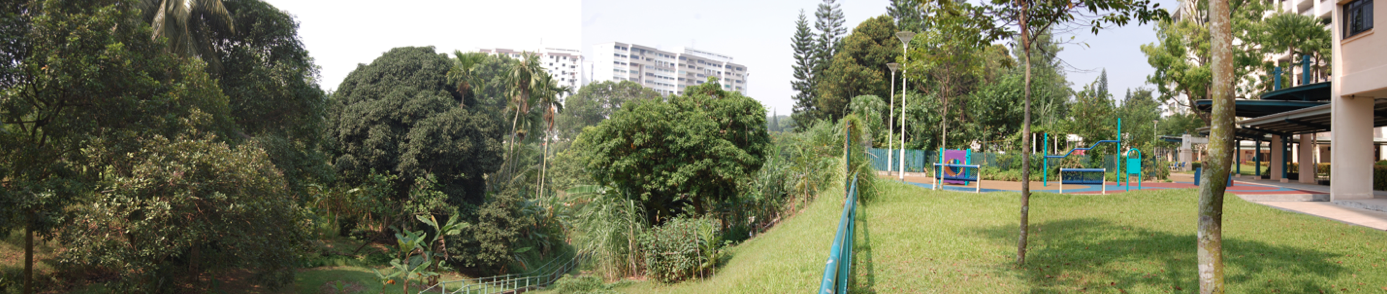
Since the conception of the ASEAN Integrated Food Security (AIFS) Framework in 2008, ASEAN member states have taken steps to implement the components and strategic thrusts laid out in the AIFS Framework. These actions can be seen as contributing to the development of a regional “commons” which is based on prioritizing the right of “all people, at all times, [to] have physical and economic access to sufficient, safe and nutritious food to meet their dietary needs and food preferences for an active and healthy life” (FAO 1996). Although a wide range of conditions exist with regard to this right across the ASEAN member states, as a net-food importing country which imports 90% of its food from a limited number of sources, in this paper Singapore is presented as a case study for the increasing importance of taking a commons perspective on food supply and security. The paper is particularly concerned with actions to diversify food sources, increase local food production and promote food and agro-based industry, research, and development. In the context of a highly urbanized population with limited land and natural resources, the paper argues that those seeming disadvantages can serve to benefit both the local and wider community.
Initially part of a design research project to discover, document, and test potential strategies to address Hong Kong’s situation as a net-food importing territory which relies on a limited number of sources – 95% of its food is imported and 60% of that comes from Mainland China – this paper traces the recent history of food security policies and actions in Singapore with respect to increasing local production. The paper examines several case studies that demonstrate the application of the AIFS framework, in particular the development of research, technology and community resources for urban agricultural production. The paper concludes with a reflection on Singapore’s role in providing for a food secure future for itself, and by extension, the entire region.
Food Networks of Hong Kong
‘Food Networks of Hong Kong’ is a research initiative that documents the systems, nodes, and networks of food supply, distribution, and waste recovery in Hong Kong in order to map out Hong Kong’s ‘foodprint’. It also researches the relation between local and global food networks through case studies looking at approaches to food security in other cities/regions as well as sites of distribution and production.
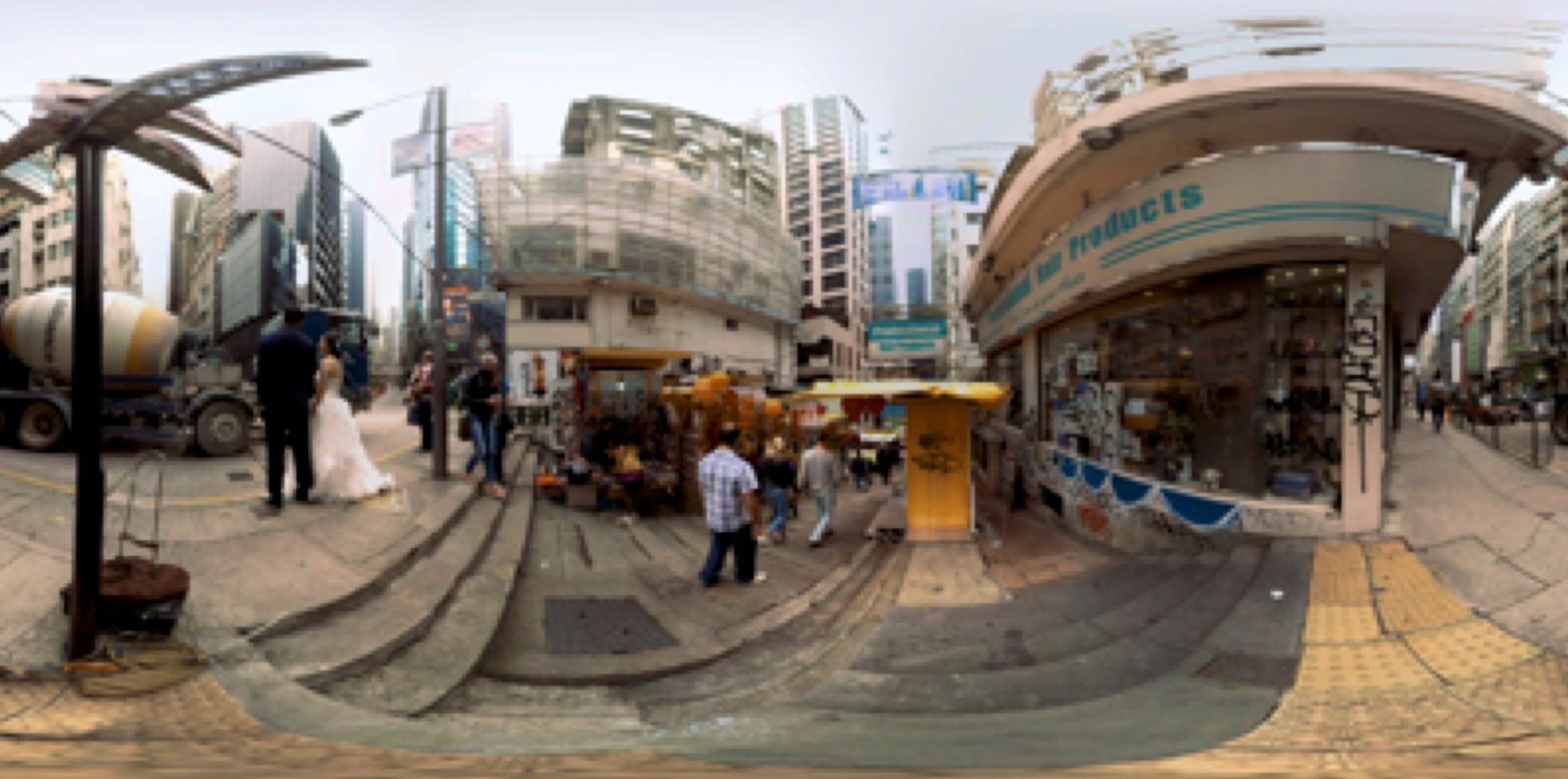 Still shot from Pottinger Street 360 film by Nicholas Buechi. © Nicolas Buechi.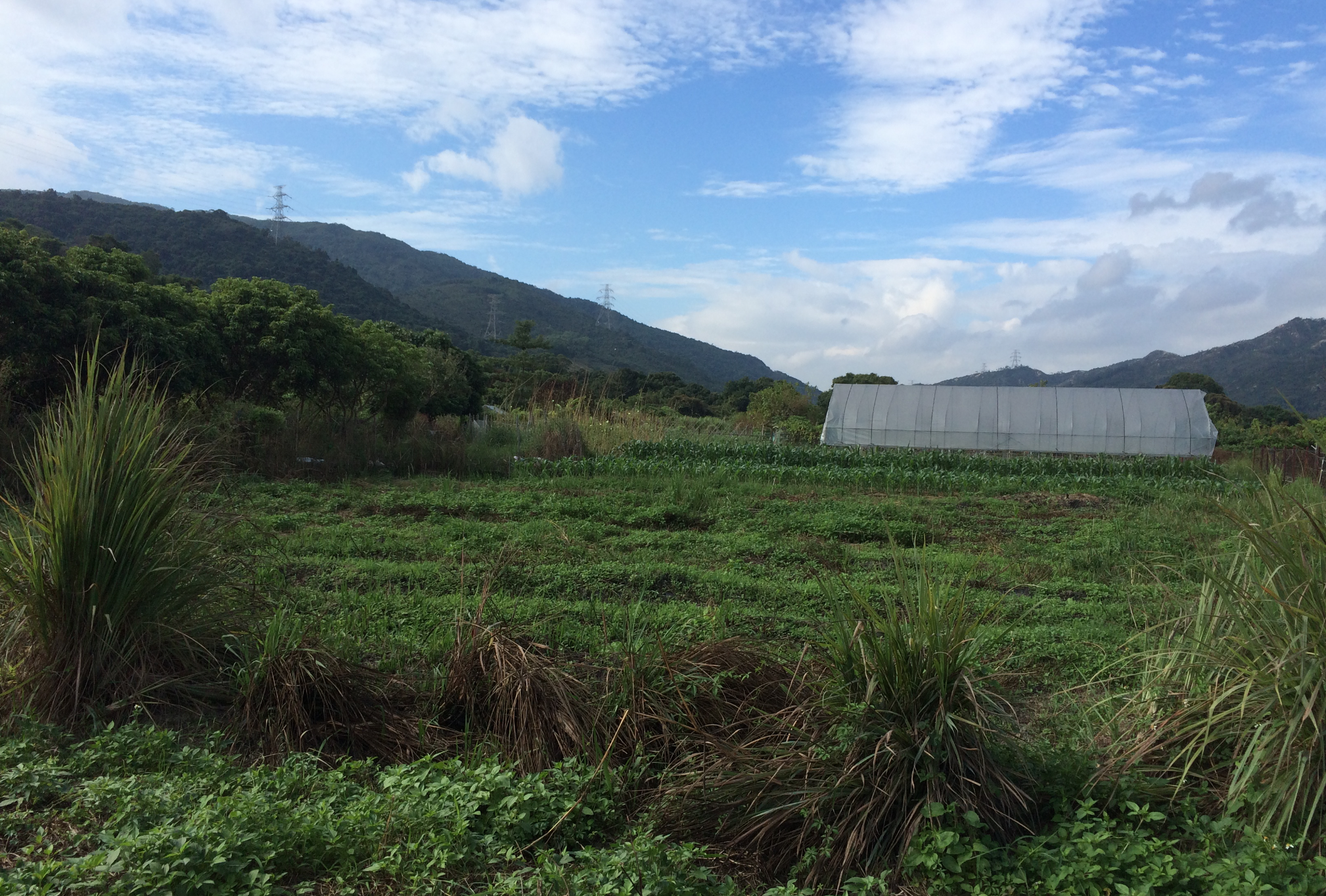
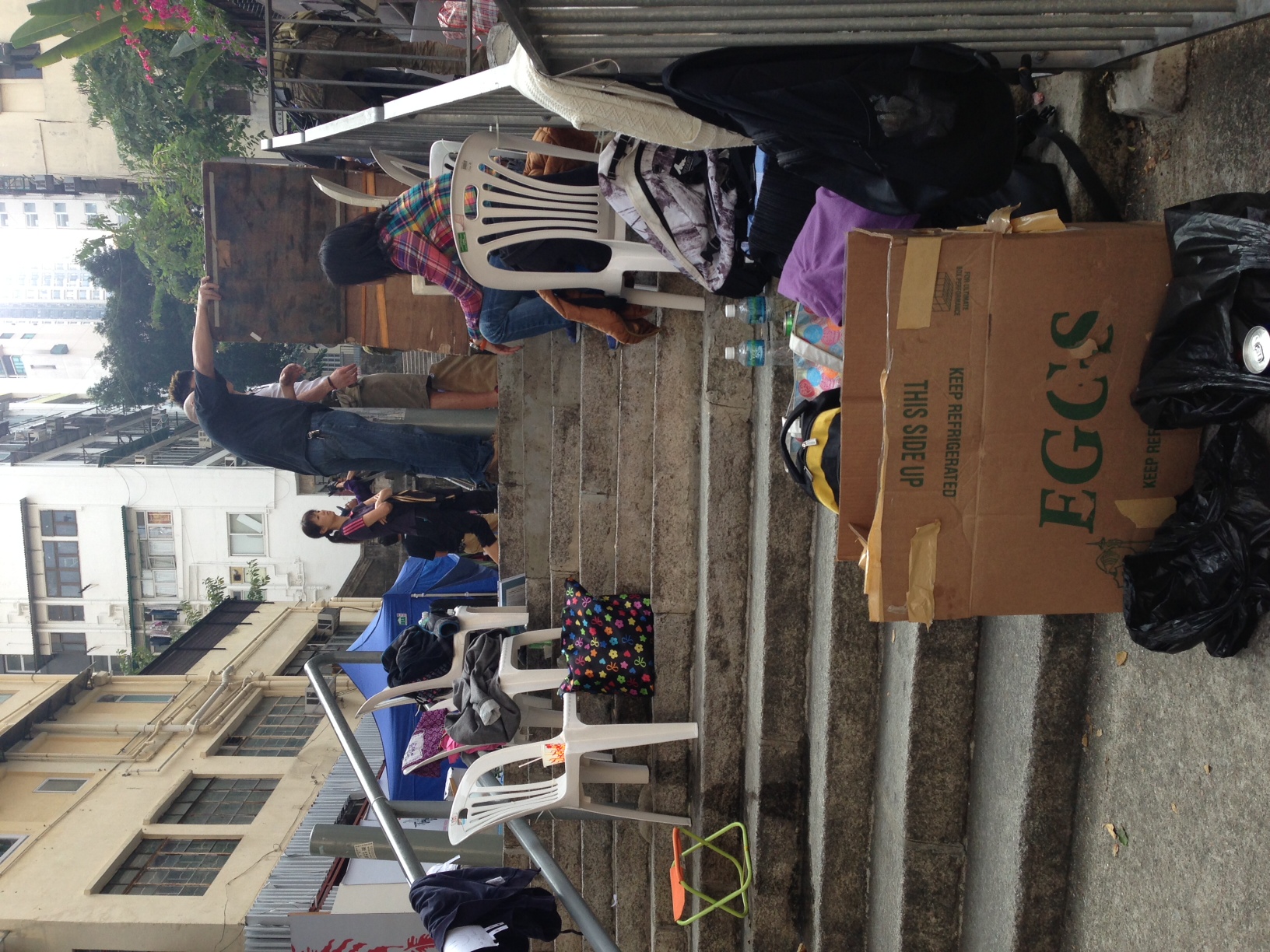
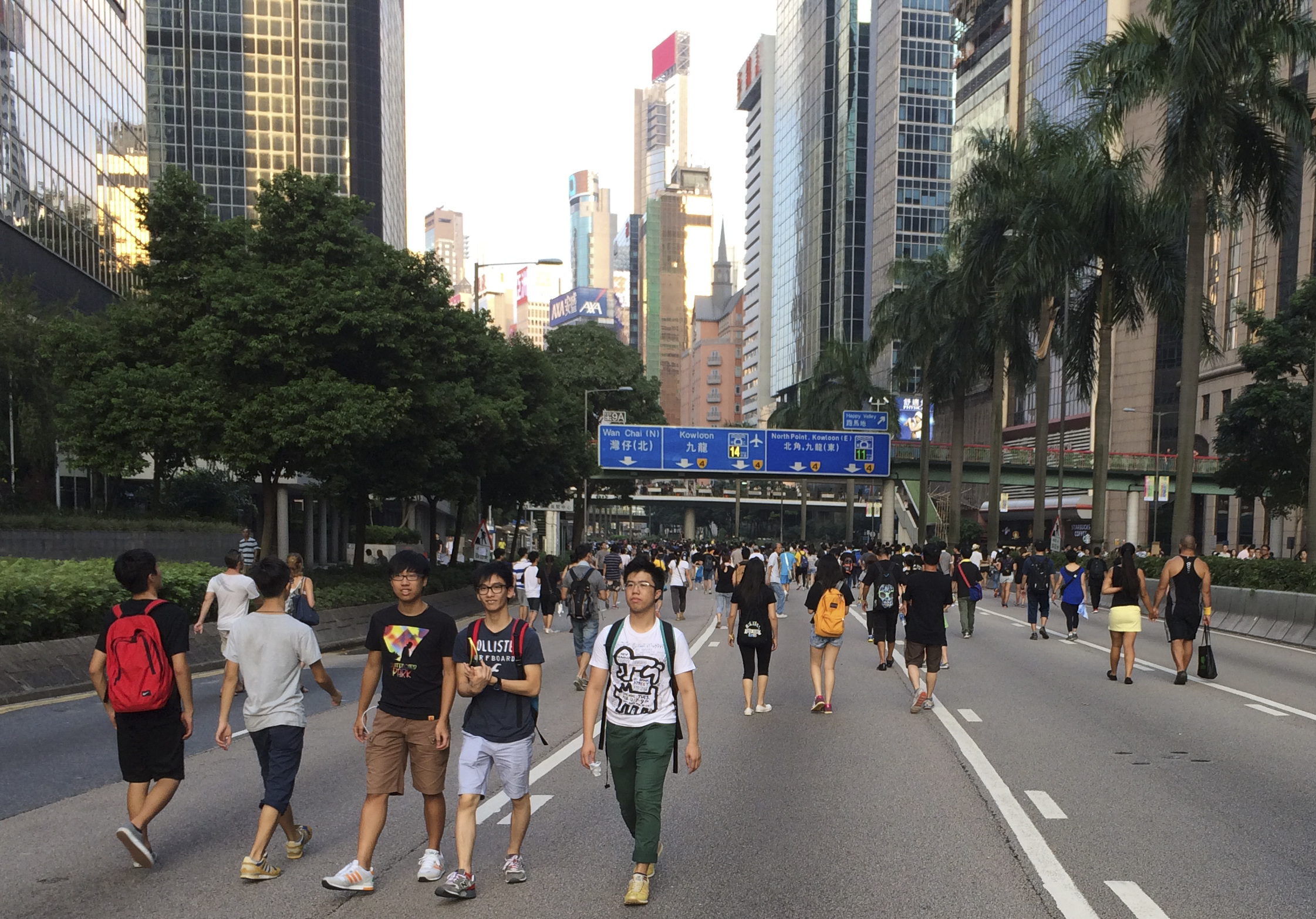 }Umbrella Movement, October 2015 Image credit: Melissa Cate Christ