growing gowanus
transverse studio with Patrick Keegan
Gowanus Lowlands ideas competition
2011
Selected entry – Gowanus Lowline Exhibition: Connections
SET Gallery, Brooklyn
Sept 15 – Oct 1, 2011
See here for the online exhibition of all the winning and selected entries.
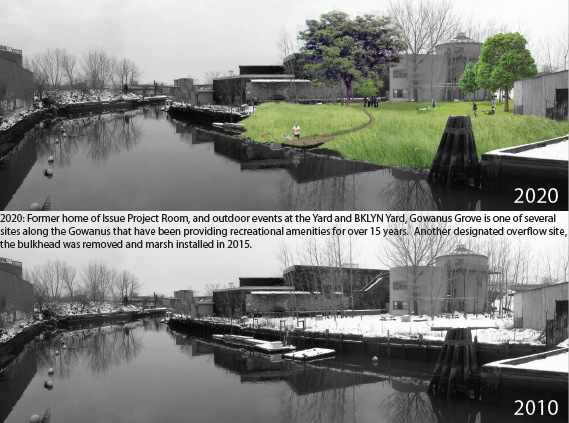
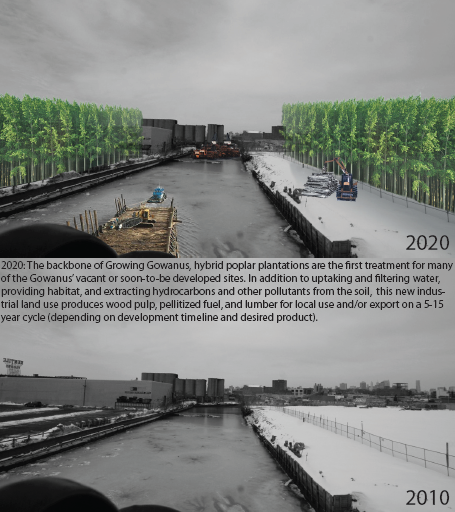
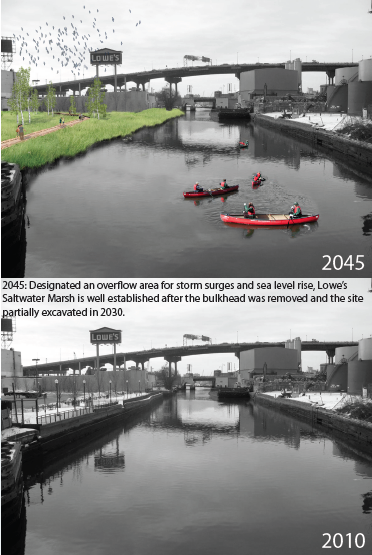
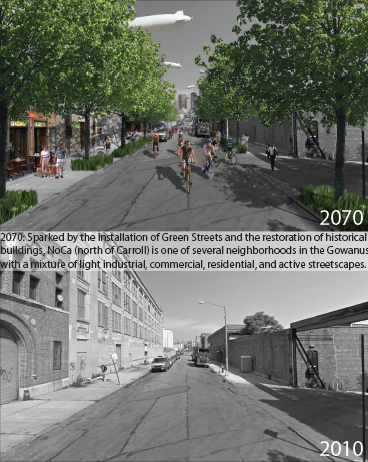
The Gowanus neighborhood and the surrounding community have a unique opportunity to incorporate long term thinking into the Superfund process. Growing Gowanus proposes to look beyond the immediate timelines and traditional methods associated with cleaning up a contaminated waterway to address international estimates of sea level rise, NYC predictions of population increase, and NYC goals for canopy/vegetative cover increase. By considering the land adjacent to the canal as sites for sequences of integrated “green” industrial/remediative /open space typologies, this unique inner city waterfront district surrounding the Gowanus Canal can perpetuate its manufacturing and industrial lineage in coexistence with a (constructed) “natural environment”. Working landscapes of silviculture, living machines, green streets, natural succession, salt marshes, and recreational areas are given space to address immediate and long term issues of contamination, climate change, and increasing numbers of residents, workers, and visitors of all species. These gradual interventions will set the stage for the eventual replacement of one industry with another as our relationship to materials and resource extraction evolves over the next 50-100 years. These (more or less) interim landscapes become the future of the Gowanus, acting as living connections to the true (slow) pace of environmental remediation and cultural/social change.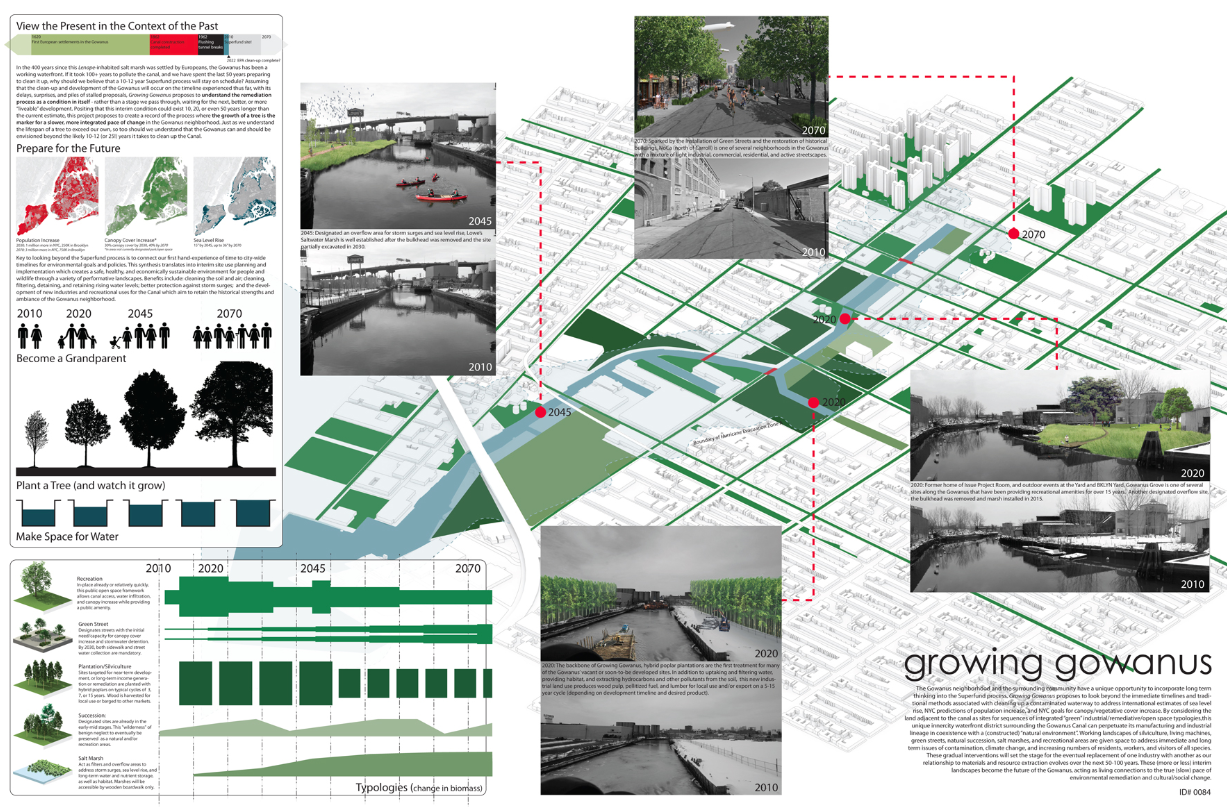
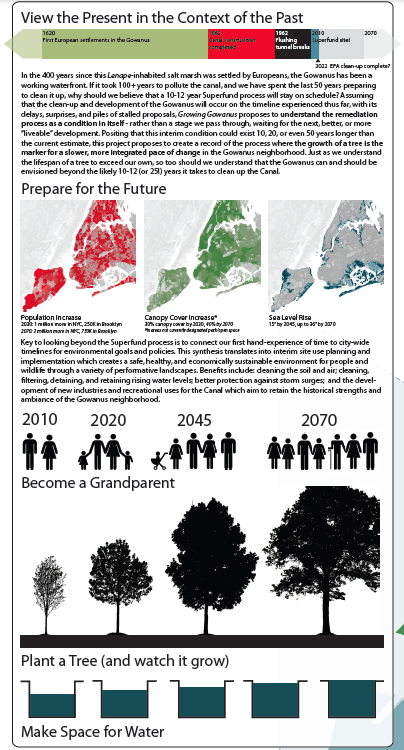
In the 400 years since this Lenape-inhabited salt marsh was settled by Europeans, the Gowanus has been a working waterfront. If it took 100+ years to pollute the canal, and we have spent the last 50 years preparing to clean it up, why should we believe that a 10-12 year Superfund process will stay on schedule? Assuming that the clean-up and development of the Gowanus will occur on the timeline experienced thus far, with its delays, surprises, and piles of stalled proposals, Growing Gowanus proposes to understand the remediation process as a condition in itself – rather than a stage we pass through, waiting for the next, better, or more “liveable” development. Positing that this interim condition could exist 10, 20, or even 50 years longer than the current estimate, this project proposes to create a record of the process where the growth of a tree is the marker for a slower, more integrated pace of change in the Gowanus neighborhood. Just as we understand the lifespan of a tree to exceed our own, so too should we understand that the Gowanus can and should be envisioned beyond the likely 10-12 (or 25!) years it takes to clean up the Canal. Key to looking beyond the Superfund process is to connect our first hand-experience of time to city-wide timelines for environmental goals and policies. This synthesis translates into interim site use planning and implementation which creates a safe, healthy, and economically sustainable environment for people and wildlife through a variety of performative landscapes. Benfits include: cleaning the soil and air; cleaning,altering, detaining, and retaining rising water levels; better protection against storm surges; and the development of new industries and recreational uses for the Canal which aim to retain the historical strengths and ambiance of the Gowanus neighborhood.
Vegetation Typologies: Recreation; Green Street; Plantation/Silviculture; Successional; Salt Marsh
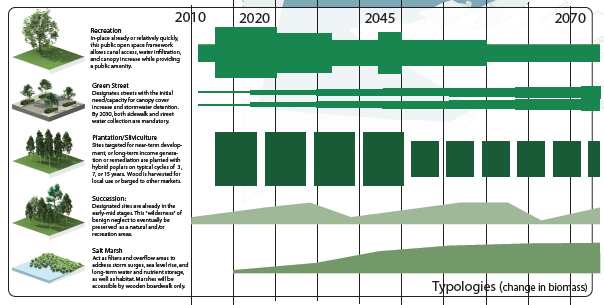
Visual timeline of vegetation typologies applied to the site